Section outline

  • Next we'll cover some of the common health problems horses face associated with their digestive system. The problems to be discussed are listed on the diagram below by the segment of the digestive tract where the problem originates. We'll start at the front and work our way to the back of the tract. 
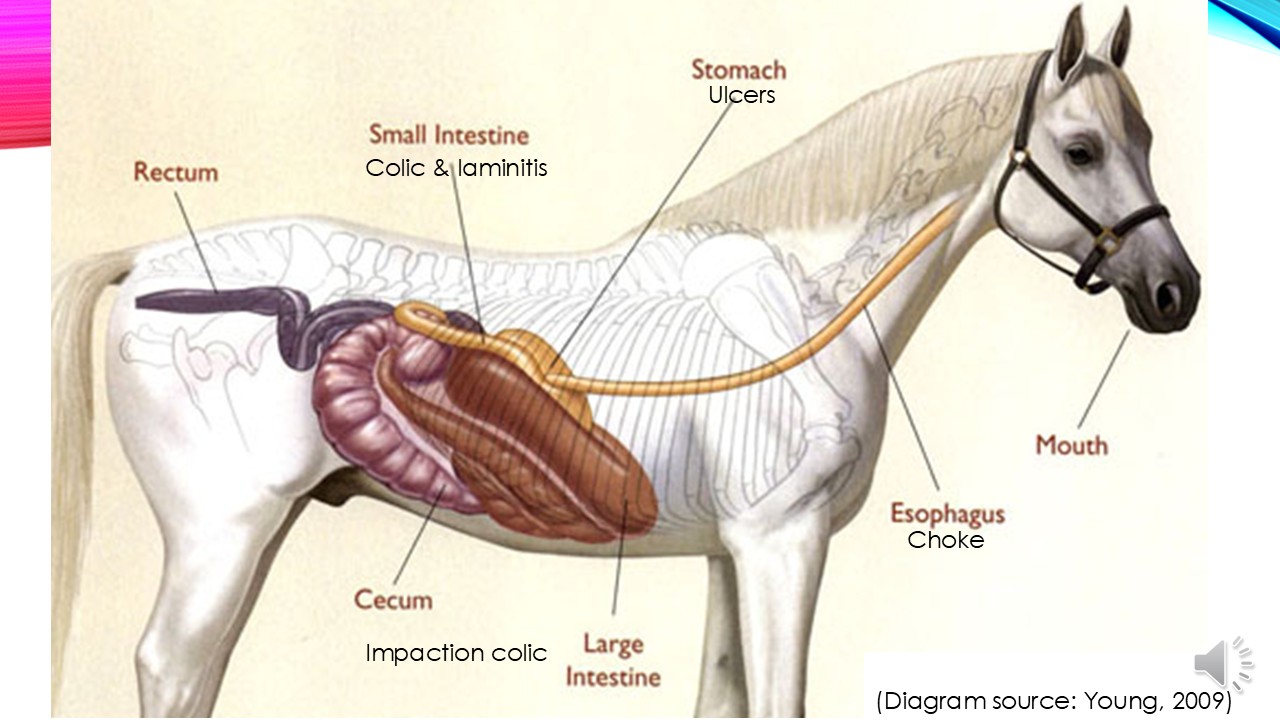
    • When a person experiences choke their airway has become obstructed. What we refer to as choke in horses involves their esophagus becoming obstructed typically with feed material. Because the horse can still breath when it is choking it isn't as immediate an emergency as it is in humans but should still be attended to as soon as possible. Many horses will continue to consume feed when they have just choked. This feed can overflow out of the esophagus and enter the airway with the potential for deadly consequences. If you suspect your horse is choking remove all feed, bedding and water until your vet arrives.


    •  

      Case of the Unexpected Impaction

      When I think of impactions colic in horses I am always reminded of a case I saw in my first year in veterinary practice....

      I received a call about a horse showing signs of colic. The owners brought the horse in to the clinic for me to examine. When I took the history on the horse there was nothing odd or unusual about it. The horse was a 4 year old gelding living with a small group of herdmates. They had free access to clean good quality water and were fed only a good quality hay (which had been tested) in several feedings per day. 

      Part of my examination included performing a rectal palpation of the digestive tract. It was immediately apparent that the horse's cecum was impacted and the manure I removed from the horse's rectum was quite dry,  coarse and looked like straw. The owners and I were confused by this. I asked the owners again about their hay so they brought in a sample of it. It was quite good looking but did have some coarser pieces in it. Ultimately what we determined was that because this gelding was the least dominant horse in the herd, he was not being allowed to eat until the more dominant horses had finished. They were leaving only the less desirable pieces of coarse stemmy hay for this gelding to eat. He was likely also eating some of the straw bedding the horses were provided in their shelter. This resulted in only this gelding getting an impaction. 

      It is interesting how behaviour and herd dynamics had such an impact on one horse's nutritional status!

    • Yes, laminitis is also the result of digestive tract issues!!

      A discussion about how other types of colic and laminitis occurs requires the understanding of how the horse's digestive system processes carbohydrates which we discussed earlier.